03 / BUYER'S GUIDE
A practical way to sell R-22 chillers in Midwest City, Oklahoma
If you have R-22 chillers in Midwest City, Oklahoma, start with the equipment's actual condition and location. We buy used industrial chillers, including machines from 20 to 2,000+ tons, and consider all tonnages and refrigerants. Equipment can come from data centers, decommissioned power plants, refineries, manufacturing shutdowns, hospitals and campuses. The buyer handles crane work, rigging, refrigerant recovery, disconnects, loading and hauling, with all freight covered. No testing is required. Cash offers and payment upfront are available after the equipment and transaction are reviewed.
R-22 refrigerant labels and prior conversions
R-22 appears on many legacy refrigeration and air-conditioning nameplates. It is an ozone-depleting HCFC, so a responsible transfer plan includes proper recovery rather than release. Some older machines may have been converted to a different refrigerant; the original plate alone cannot confirm the current charge. Provide photographs of the equipment plate and any conversion label, together with whatever maintenance history is available. A missing history is not a reason for the owner to run or open the equipment. For this equipment, note whether the current refrigerant is confirmed, unknown or documented as a conversion. If an item is not visible or its history is unknown, say so rather than assigning it a condition. Drawings or records are helpful when available, but the first conversation can begin with clear photographs and the information already on hand.
Nameplates and photographs for R-22 chillers
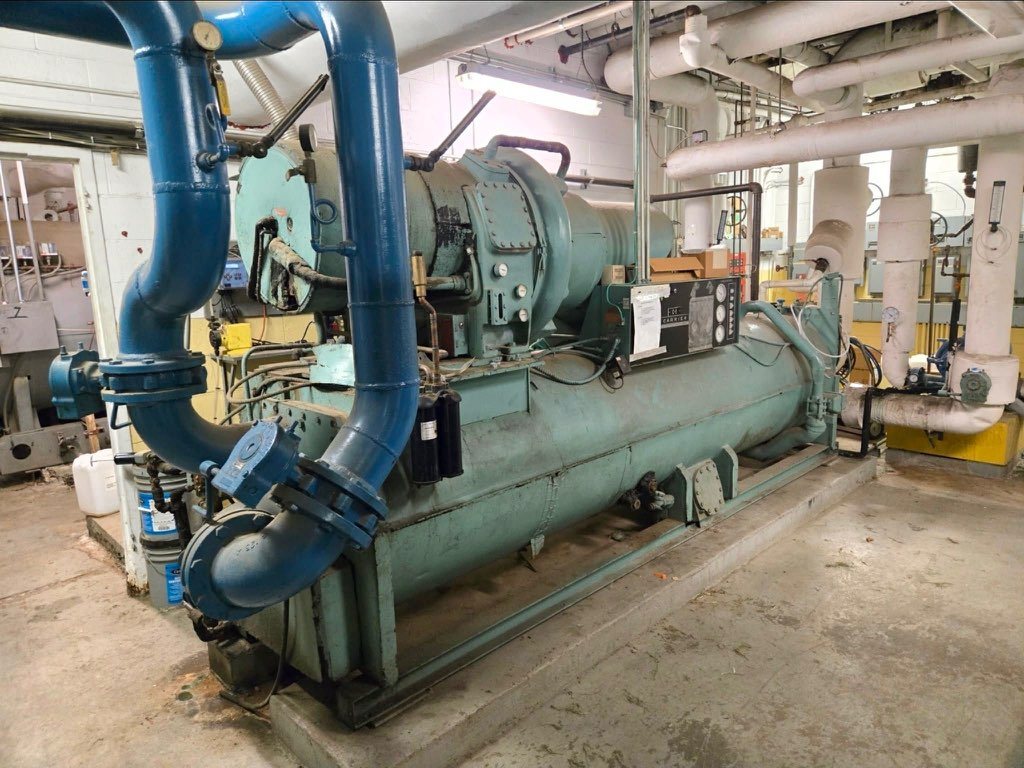
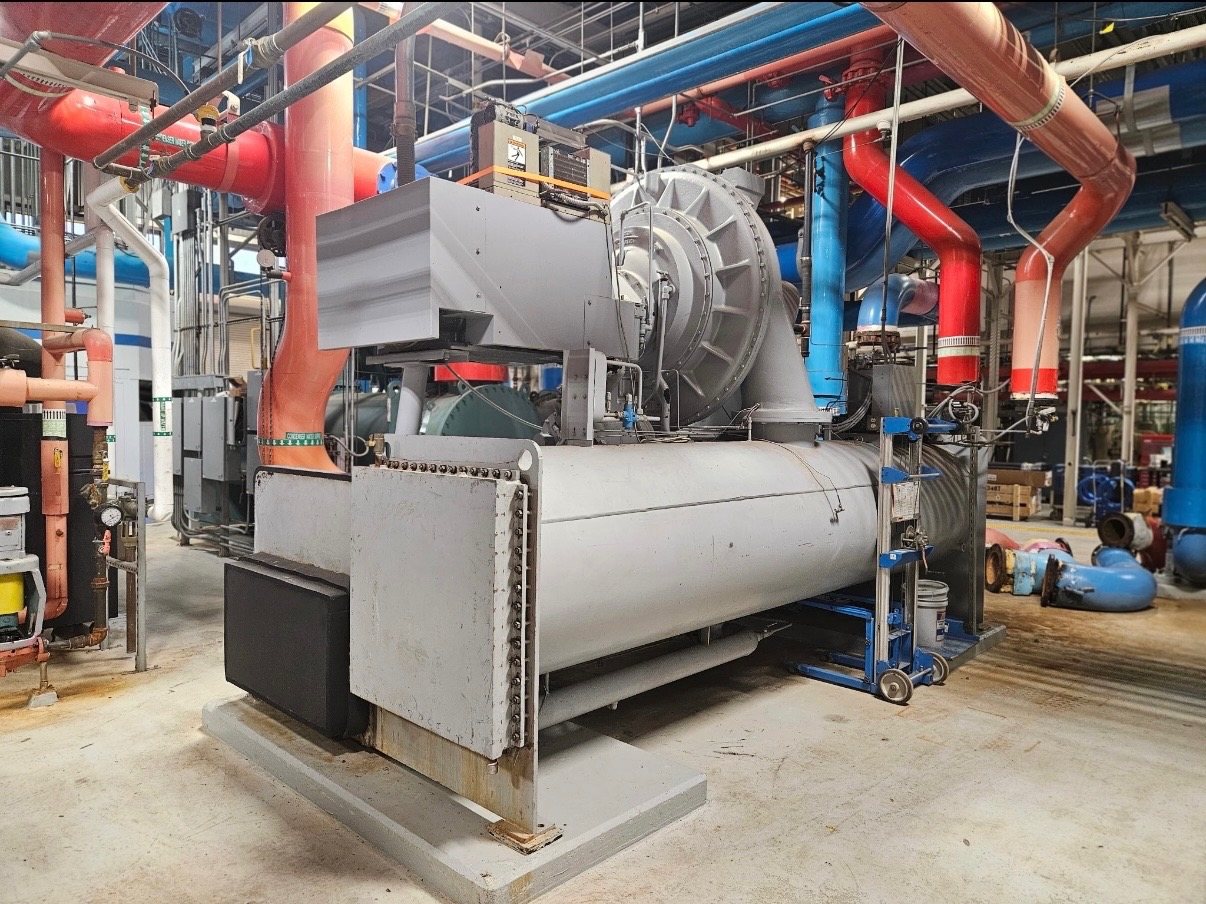
Start with a readable picture of the main nameplate. Include the manufacturer, complete model and serial number, rated cooling tons, supply voltage and refrigerant if those fields are present. Do not confuse nominal tons of cooling with the physical weight of the machine. If the plate is damaged, provide the clearest photo available and say which fields cannot be read. A separate compressor, motor, starter or module tag can add useful context, but it does not replace the primary unit identification. For R-22 chillers, photograph the R-22 marking and any replacement refrigerant sticker, along with model, serial and tonnage.
Access and site details for Midwest City
A Midwest City facility may have specific entry, escort or photography rules; ask the site contact before documenting restricted areas. Identify the actual machine room or yard, the permitted loading entrance and nearby equipment that must remain accessible. Measurements of doors and a description of overhead or underground constraints help the removal team assess the route. In particular, show the full unit and identify outdoor, rooftop or indoor machine-room placement. Give approximate measurements where possible and identify a contact who knows the property. These observations support a site-specific plan; they do not replace a professional evaluation of the lifting route or the ground.
Refrigerant and isolation for R-22 chillers
A machine can appear inactive while refrigerant, electrical energy or pressurized water remains present. Leave the system intact and report what is known about its status. The buyer handles refrigerant recovery and disconnects, coordinated with the property's authorized personnel and appropriate qualified workers. Identify shared utilities or operating equipment that may constrain isolation. Do not assume a line is empty, release refrigerant, remove guards or perform a test to create a more complete listing. For this machine, disclose known R-22 charge or conversion history and leave recovery to the buyer-arranged qualified team.
Rigging, loading and freight for R-22 chillers
For an agreed purchase, the buyer handles rigging and crane requirements, loading and hauling, with all freight covered. Tell the team if the chiller is above grade, below grade or in a crowded machine room, and whether a gate or roof edge limits access. Manufacturer drawings, original shipping dimensions and lifting instructions can support the assessment if available. The physical route, possible staging area and safe lift points must be checked for the particular job; cooling tonnage is not a lifting specification. A refrigerant designation does not establish that the machine has been recovered or made ready to lift. Coordinate recovery and isolation separately from the physical loading plan.
Cash offers and condition review for R-22 chillers
We only buy used industrial chillers; we do not sell equipment. A seller can request a cash offer, with payment upfront and no testing required. Provide available information about condition, ownership and removal access so the equipment can be evaluated on its own facts. If pumps, controls, starters or other items are included, list them separately. A purchase is subject to review and mutual agreement; a photo or capacity label by itself is not a promise that a particular unit will be accepted. A refrigerant label is one part of the description, not evidence that the machine runs or that its current charge has been verified.
Preparing for equipment handoff in Midwest City
For a smoother discussion, name a site contact and someone authorized to sell the equipment. Specify the chiller, associated controls and any loose components that transfer with it, and identify anything excluded. Provide the actual loading entrance, known utility status and any facility rules that affect access. Current photos and existing records help the removal team develop an appropriate plan. Leave isolation, refrigerant recovery and the handling work to the coordinated professionals instead of making unverified preparations. To start, call (614) 715-3047, text photos, or email saleselectricalbuyers@gmail.com. Include the site city or county and a good contact number, but do not enter restricted areas merely to take pictures.