03 / BUYER'S GUIDE
A practical way to sell R-22 chillers in Oklahoma
If you have R-22 chillers in Oklahoma, start with the equipment's actual condition and location. We buy used industrial chillers, including machines from 20 to 2,000+ tons, and consider all tonnages and refrigerants. Equipment can come from data centers, decommissioned power plants, refineries, manufacturing shutdowns, hospitals and campuses. The buyer handles crane work, rigging, refrigerant recovery, disconnects, loading and hauling, with all freight covered. No testing is required. Cash offers and payment upfront are available after the equipment and transaction are reviewed.
R-22 refrigerant labels and prior conversions
R-22 appears on many legacy refrigeration and air-conditioning nameplates. It is an ozone-depleting HCFC, so a responsible transfer plan includes proper recovery rather than release. Some older machines may have been converted to a different refrigerant; the original plate alone cannot confirm the current charge. Provide photographs of the equipment plate and any conversion label, together with whatever maintenance history is available. A missing history is not a reason for the owner to run or open the equipment. For this equipment, note whether the current refrigerant is confirmed, unknown or documented as a conversion. If an item is not visible or its history is unknown, say so rather than assigning it a condition. Drawings or records are helpful when available, but the first conversation can begin with clear photographs and the information already on hand.
Nameplates and photographs for R-22 chillers
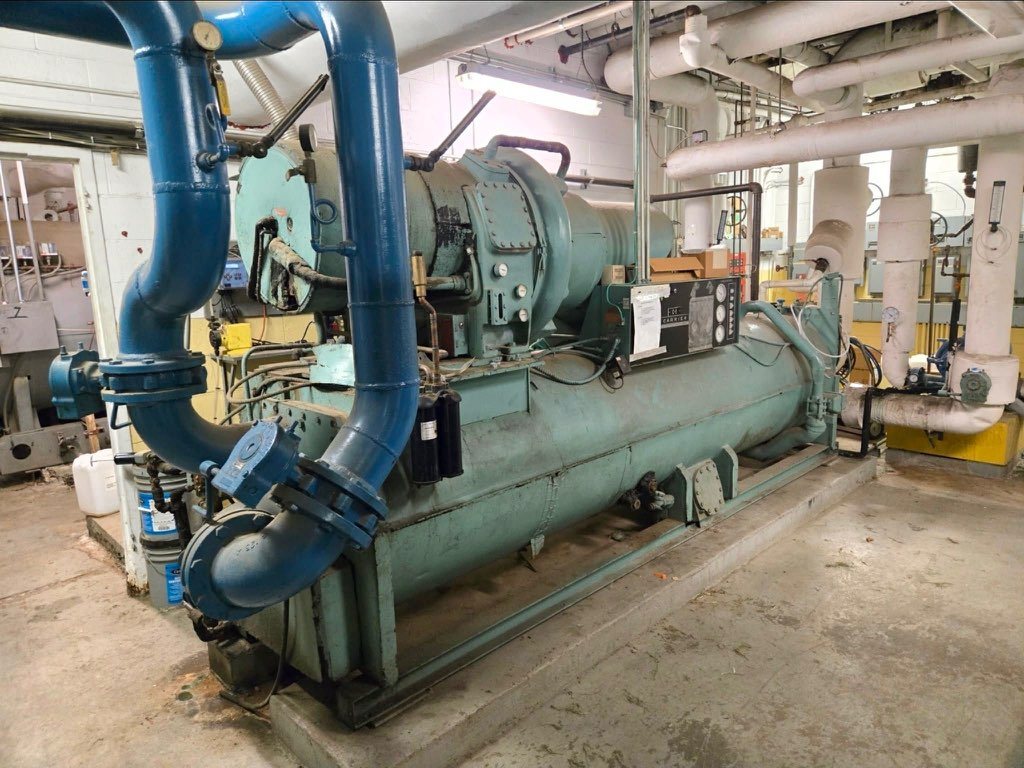
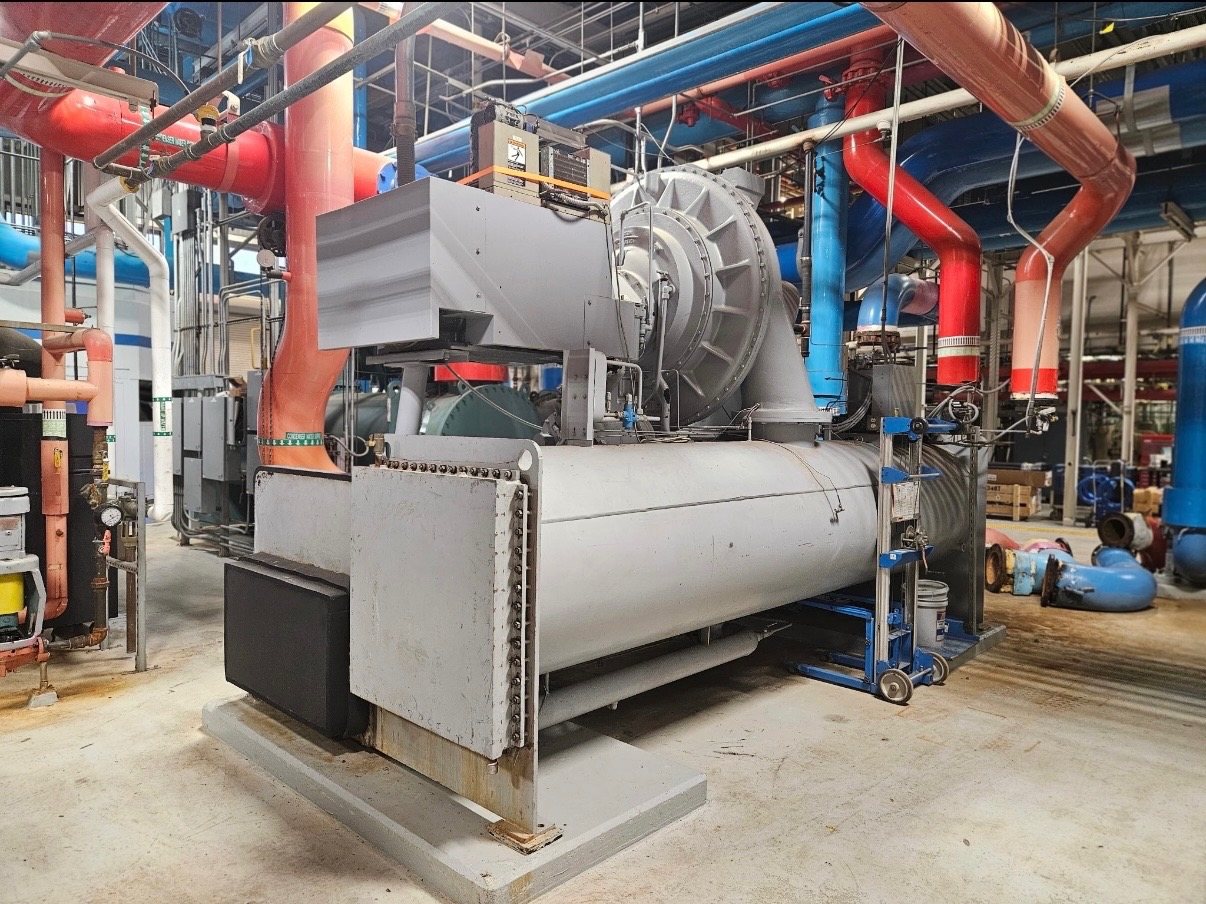
A complete model and serial number helps distinguish similar-looking chillers. Record the nameplate capacity, refrigerant and power requirements when readable, and photograph any separate compressor or control labels that may clarify the configuration. Include one wide image and several detail images rather than relying on a single close-up. If a field is missing or the original nameplate is gone, note the uncertainty and share whatever matching drawings or maintenance records the facility already has. For R-22 chillers, photograph the R-22 marking and any replacement refrigerant sticker, along with model, serial and tonnage.
Access and site details for Oklahoma
Across Oklahoma, chiller access can vary between a roof, outdoor equipment yard, basement and central plant. Identify the property's service entrance, the location of the machine and the actual path to a possible loading point. Doors, fences, floor changes, overhead utilities and the space around occupied equipment are more useful to document than a street address by itself. The facility contact can explain site-specific rules and identify which connected systems remain in service. In particular, show the full unit and identify outdoor, rooftop or indoor machine-room placement. Give approximate measurements where possible and identify a contact who knows the property. These observations support a site-specific plan; they do not replace a professional evaluation of the lifting route or the ground.
Refrigerant and isolation for R-22 chillers
A machine can appear inactive while refrigerant, electrical energy or pressurized water remains present. Leave the system intact and report what is known about its status. The buyer handles refrigerant recovery and disconnects, coordinated with the property's authorized personnel and appropriate qualified workers. Identify shared utilities or operating equipment that may constrain isolation. Do not assume a line is empty, release refrigerant, remove guards or perform a test to create a more complete listing. For this machine, disclose known R-22 charge or conversion history and leave recovery to the buyer-arranged qualified team.
Rigging, loading and freight for R-22 chillers
The buyer covers freight and handles the crane, rigging, loading and hauling needed for an agreed purchase. Good planning begins with the equipment's footprint, height, verified weight information and the narrowest part of the route. Show adjacent machines, walls, curbs and overhead obstructions in photos; note any floor loading, ground condition or access rules known to the facility. The removal method and any necessary permits are determined for the actual equipment and location, rather than promised in advance. A refrigerant designation does not establish that the machine has been recovered or made ready to lift. Coordinate recovery and isolation separately from the physical loading plan.
Cash offers and condition review for R-22 chillers
Our business buys used industrial chillers; it does not sell chillers. You can request a cash offer with payment upfront, and the equipment does not need to be tested. A useful description identifies the machine, current condition, included components and the location from which it would be removed. Any offer is subject to review and agreement, including verification that the seller is authorized to transfer the chiller. Known damage or missing documentation should be disclosed instead of hidden or guessed. A refrigerant label is one part of the description, not evidence that the machine runs or that its current charge has been verified.
Preparing for equipment handoff in Oklahoma
Separate the equipment description from the facility's access requirements. Identify the legal owner or authorized representative, list what is included, and describe where the chiller sits today. Note whether the facility requires escorts, permits, protection for occupied areas or coordination with an operating plant. Existing drawings and safe, current photos can help, but missing information should be marked unknown. Pickup and payment details are agreed for the actual transaction rather than inferred from an online description. To start, call (614) 715-3047, text photos, or email saleselectricalbuyers@gmail.com. Include the site city or county and a good contact number, but do not enter restricted areas merely to take pictures.