03 / BUYER'S GUIDE
A practical way to sell campus chillers in Norman, Oklahoma
If you have campus chillers in Norman, Oklahoma, start with the equipment's actual condition and location. We buy used industrial chillers, including machines from 20 to 2,000+ tons, and consider all tonnages and refrigerants. Equipment can come from data centers, decommissioned power plants, refineries, manufacturing shutdowns, hospitals and campuses. The buyer handles crane work, rigging, refrigerant recovery, disconnects, loading and hauling, with all freight covered. No testing is required. Cash offers and payment upfront are available after the equipment and transaction are reviewed.
Campus chilled-water systems and building access
A campus chiller can serve one building or be connected to a central chilled-water network. Clarify which machine is being offered, whether the loop serves occupied buildings and which controls, pumps or other accessories are included. Identify the correct building entrance, loading area and any pedestrian or vehicle restrictions. If the unit is inside a plant room or below grade, show the route and vertical changes. Coordinate any shutdown boundaries with the campus facilities team. For this equipment, separate the individual chiller from shared campus plant equipment and document known modifications. If an item is not visible or its history is unknown, say so rather than assigning it a condition. Drawings or records are helpful when available, but the first conversation can begin with clear photographs and the information already on hand.
Nameplates and photographs for campus chillers
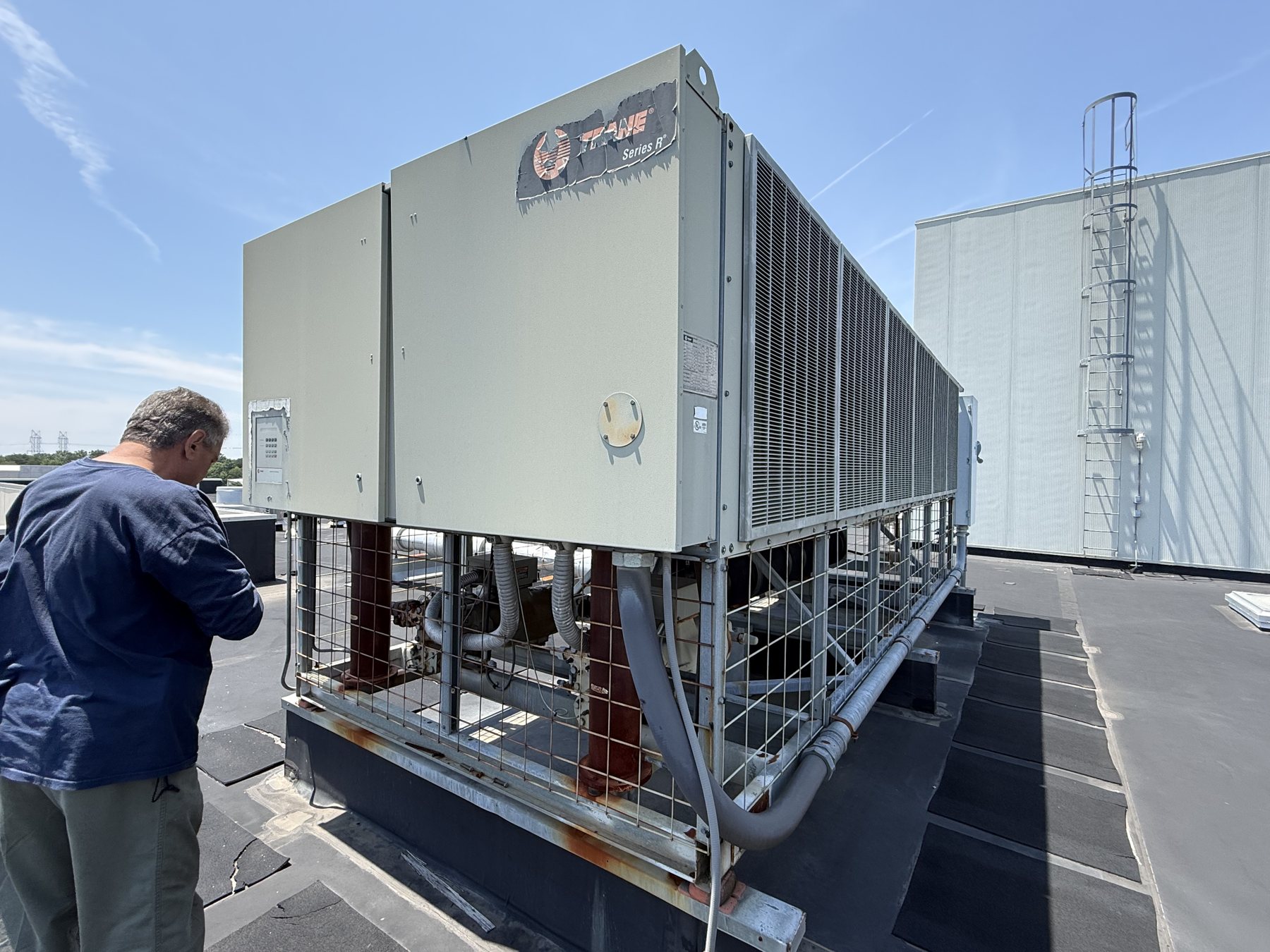
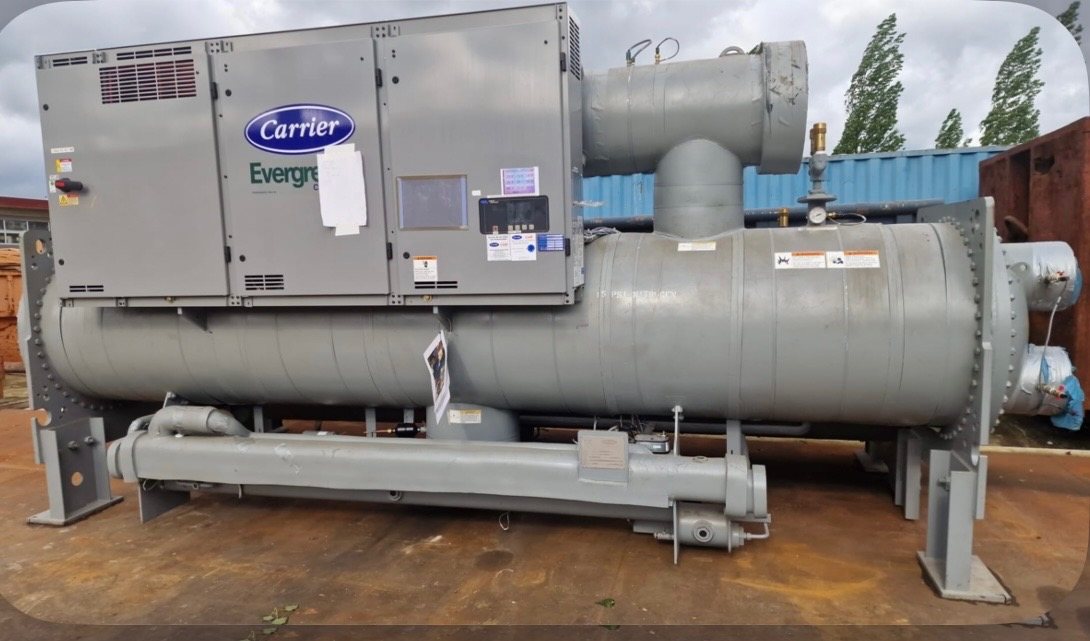
A complete model and serial number helps distinguish similar-looking chillers. Record the nameplate capacity, refrigerant and power requirements when readable, and photograph any separate compressor or control labels that may clarify the configuration. Include one wide image and several detail images rather than relying on a single close-up. If a field is missing or the original nameplate is gone, note the uncertainty and share whatever matching drawings or maintenance records the facility already has. For campus chillers, capture the chiller plate, rated tons and controls, and identify any separate items being offered.
Access and site details for Norman
For a Norman facility, distinguish a standalone building chiller from a unit connected to a shared campus or central-plant loop. Show the entrance and the path through any mechanical room, and tell the buyer if pedestrian routes or occupied buildings need protection. The facility team can identify which utilities and equipment must remain in service. In particular, show the plant-room exit, pedestrian areas, loading approach and any restrictions on campus vehicle access. Give approximate measurements where possible and identify a contact who knows the property. These observations support a site-specific plan; they do not replace a professional evaluation of the lifting route or the ground.
Refrigerant and isolation for campus chillers
Before a chiller is moved, the actual refrigerant and utility connections need a site-specific plan. The buyer handles refrigerant recovery and disconnects; the facility and removal personnel coordinate the isolation points and safe access. Share the refrigerant label, any known conversion, and whether water or electrical connections still appear intact. Do not open valves, dismantle piping or start the equipment just to obtain an offer. If the charge or isolation status is uncertain, reporting that uncertainty is useful. For this machine, coordinate water, power and refrigerant isolation with the responsible campus facilities personnel.
Rigging, loading and freight for campus chillers
For an agreed purchase, the buyer handles rigging and crane requirements, loading and hauling, with all freight covered. Tell the team if the chiller is above grade, below grade or in a crowded machine room, and whether a gate or roof edge limits access. Manufacturer drawings, original shipping dimensions and lifting instructions can support the assessment if available. The physical route, possible staging area and safe lift points must be checked for the particular job; cooling tonnage is not a lifting specification. The plant representative should identify active equipment, occupied areas and any restrictions on the route or staging space. The team can then assess how the particular chiller can be removed without assuming the whole facility is shut down.
Cash offers and condition review for campus chillers
We only buy used industrial chillers; we do not sell equipment. A seller can request a cash offer, with payment upfront and no testing required. Provide available information about condition, ownership and removal access so the equipment can be evaluated on its own facts. If pumps, controls, starters or other items are included, list them separately. A purchase is subject to review and mutual agreement; a photo or capacity label by itself is not a promise that a particular unit will be accepted. Identify who has authority to sell the individual chiller and distinguish it from shared plant equipment that is not included.
Preparing for equipment handoff in Norman
Separate the equipment description from the facility's access requirements. Identify the legal owner or authorized representative, list what is included, and describe where the chiller sits today. Note whether the facility requires escorts, permits, protection for occupied areas or coordination with an operating plant. Existing drawings and safe, current photos can help, but missing information should be marked unknown. Pickup and payment details are agreed for the actual transaction rather than inferred from an online description. To start, call (614) 715-3047, text photos, or email saleselectricalbuyers@gmail.com. Include the site city or county and a good contact number, but do not enter restricted areas merely to take pictures.