03 / BUYER'S GUIDE
A practical way to sell R-11 chillers in Moore, Oklahoma
If you have R-11 chillers in Moore, Oklahoma, start with the equipment's actual condition and location. We buy used industrial chillers, including machines from 20 to 2,000+ tons, and consider all tonnages and refrigerants. Equipment can come from data centers, decommissioned power plants, refineries, manufacturing shutdowns, hospitals and campuses. The buyer handles crane work, rigging, refrigerant recovery, disconnects, loading and hauling, with all freight covered. No testing is required. Cash offers and payment upfront are available after the equipment and transaction are reviewed.
Older R-11 equipment and identification records
R-11 is a legacy refrigerant associated with some older chillers. Aged plant documents can be useful, but they do not prove what is currently in a machine that may have been converted, emptied or modified. Photograph the present refrigerant label and share any retrofit or recovery records. If the label is unreadable, say so rather than guessing. Because R-11 is an ozone-depleting refrigerant, proper handling and recovery matter; leave the closed system undisturbed for the qualified recovery process arranged by the buyer. For this equipment, distinguish an original R-11 marking from documented current contents if conversion history is available. If an item is not visible or its history is unknown, say so rather than assigning it a condition. Drawings or records are helpful when available, but the first conversation can begin with clear photographs and the information already on hand.
Nameplates and photographs for R-11 chillers
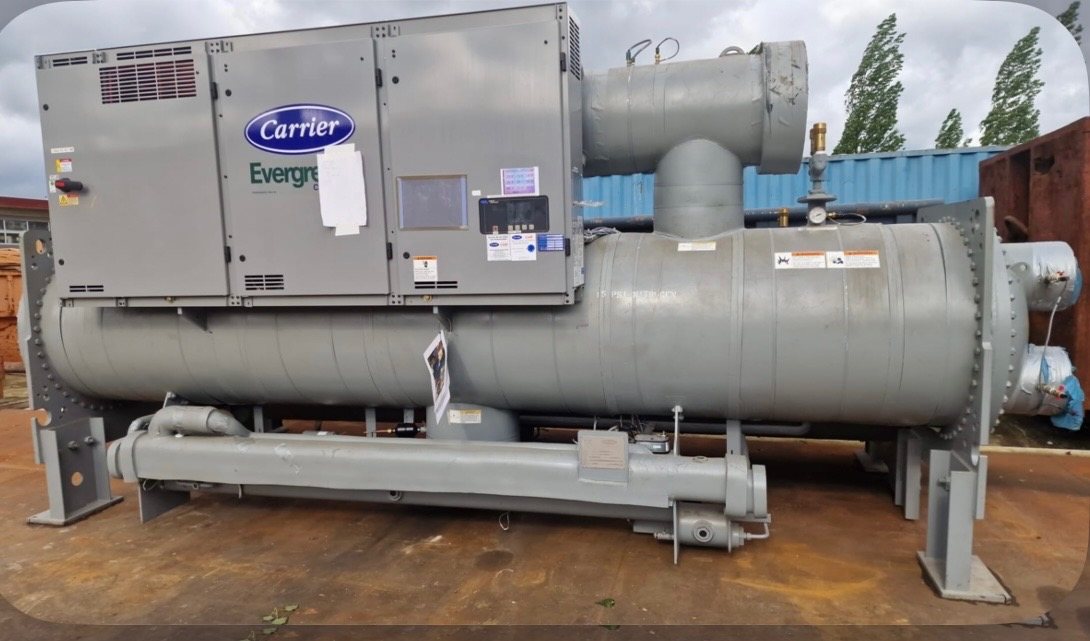
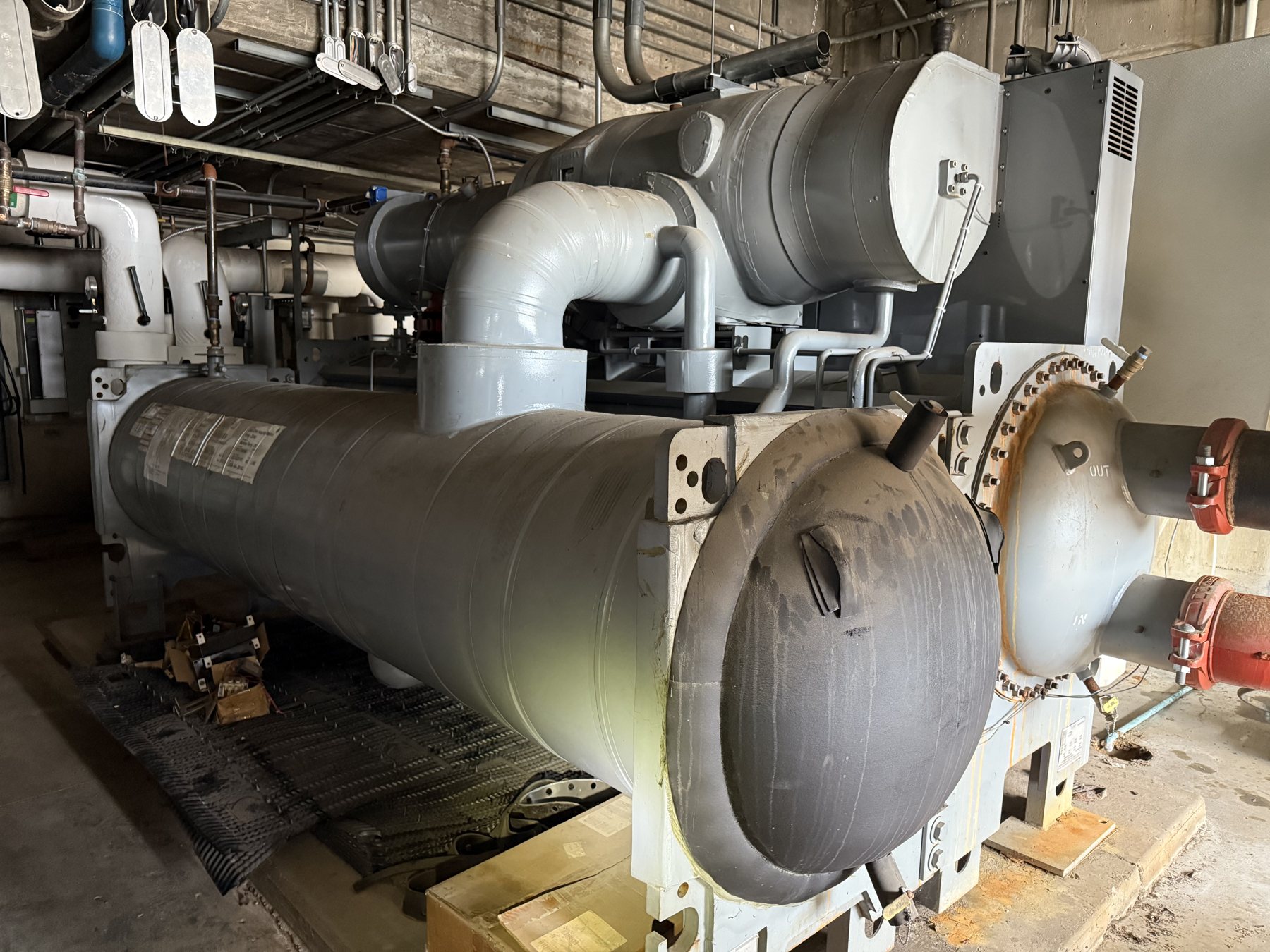
The most useful first photograph is often the manufacturer's data plate: it can identify the exact model, serial number, capacity, electrical rating and refrigerant. Then photograph the complete machine from enough angles to show its configuration. If the label is painted over or unreadable, send what is legible along with any equipment schedule or manual that clearly belongs to the unit. Cooling capacity in tons is not the same measurement as lifting weight, and neither should be guessed from a photograph. For R-11 chillers, photograph the R-11 marking, machine model, serial number, rated tons and any retrofit labels.
Access and site details for Moore
For equipment in Moore, note whether the chiller is beside a building, behind a service enclosure or above the ground floor. A gate opening, curb, rooftop parapet or narrow drive can change the handling plan. Show the complete path from the equipment to the area where a truck could be positioned, and identify any access restrictions. In particular, show room access, shell dimensions and the location of any detached controls or storage equipment. Give approximate measurements where possible and identify a contact who knows the property. These observations support a site-specific plan; they do not replace a professional evaluation of the lifting route or the ground.
Refrigerant and isolation for R-11 chillers
Refrigerant recovery and utility disconnects are handled by the buyer as part of the removal arrangement. The facility should identify its authorized contact and explain whether the chiller is linked to any equipment that must remain operating. Qualified personnel can determine how the actual installation should be isolated and handled. The owner should not vent refrigerant, loosen fittings, bypass safeguards or turn on an inactive machine for a potential sale. Provide prior recovery or conversion records if they exist. For this machine, report any known R-11 charge, previous recovery or conversion, and never release refrigerant to make a unit ready.
Rigging, loading and freight for R-11 chillers
The buyer handles crane work, rigging, loading and hauling, and covers all freight. The safe method still depends on the actual site and the machine's verified dimensions and lifting information. Photograph the nearest suitable vehicle approach and the entire path between it and the chiller. Share the narrowest door or gate width, overhead clearance, changes in elevation and any known floor or ground restrictions. If a crane appears necessary, point out overhead lines and structures without assuming where a crane can safely stand. A refrigerant designation does not establish that the machine has been recovered or made ready to lift. Coordinate recovery and isolation separately from the physical loading plan.
Cash offers and condition review for R-11 chillers
Our business buys used industrial chillers; it does not sell chillers. You can request a cash offer with payment upfront, and the equipment does not need to be tested. A useful description identifies the machine, current condition, included components and the location from which it would be removed. Any offer is subject to review and agreement, including verification that the seller is authorized to transfer the chiller. Known damage or missing documentation should be disclosed instead of hidden or guessed. A refrigerant label is one part of the description, not evidence that the machine runs or that its current charge has been verified.
Preparing for equipment handoff in Moore
A clear handoff begins with ownership and scope. Specify which machine, controls and accessories are offered, who can approve the sale, and whether other tenants or contractors control any part of the route. Gather the information already available: photos, equipment plates, drawings and known disconnection history. Share any site-specific access or safety requirements with the buyer. The removal approach and timing must be coordinated with the facility; do not dismantle the machine or block an active access route in advance. To start, call (614) 715-3047, text photos, or email saleselectricalbuyers@gmail.com. Include the site city or county and a good contact number, but do not enter restricted areas merely to take pictures.