03 / BUYER'S GUIDE
A practical way to sell Carrier chillers in Moore, Oklahoma
If you have Carrier chillers in Moore, Oklahoma, start with the equipment's actual condition and location. We buy used industrial chillers, including machines from 20 to 2,000+ tons, and consider all tonnages and refrigerants. Equipment can come from data centers, decommissioned power plants, refineries, manufacturing shutdowns, hospitals and campuses. The buyer handles crane work, rigging, refrigerant recovery, disconnects, loading and hauling, with all freight covered. No testing is required. Cash offers and payment upfront are available after the equipment and transaction are reviewed.
Carrier chiller model and configuration
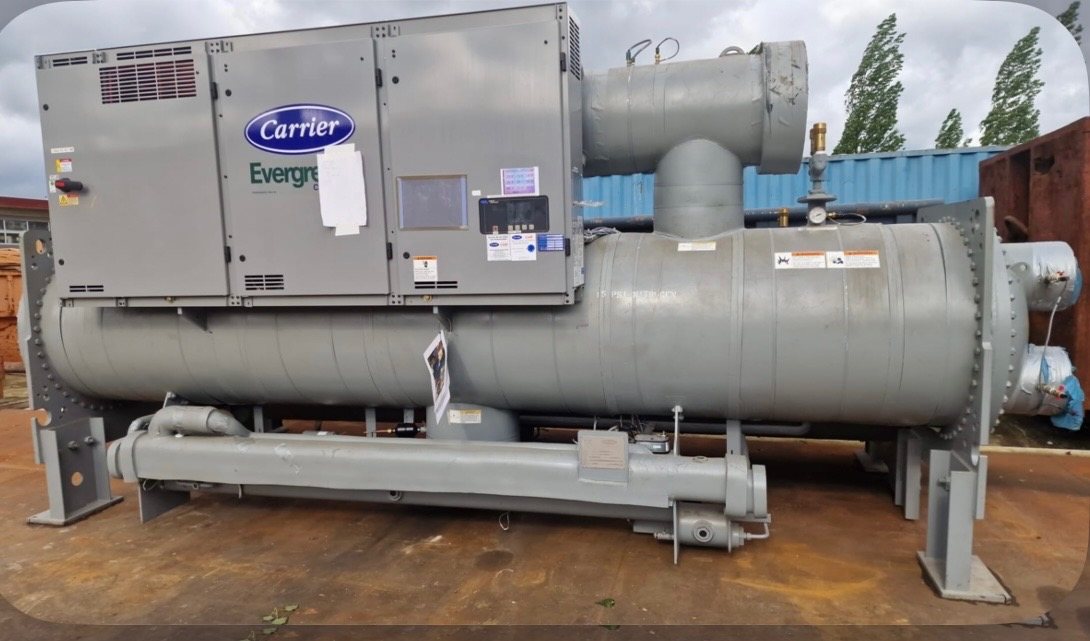
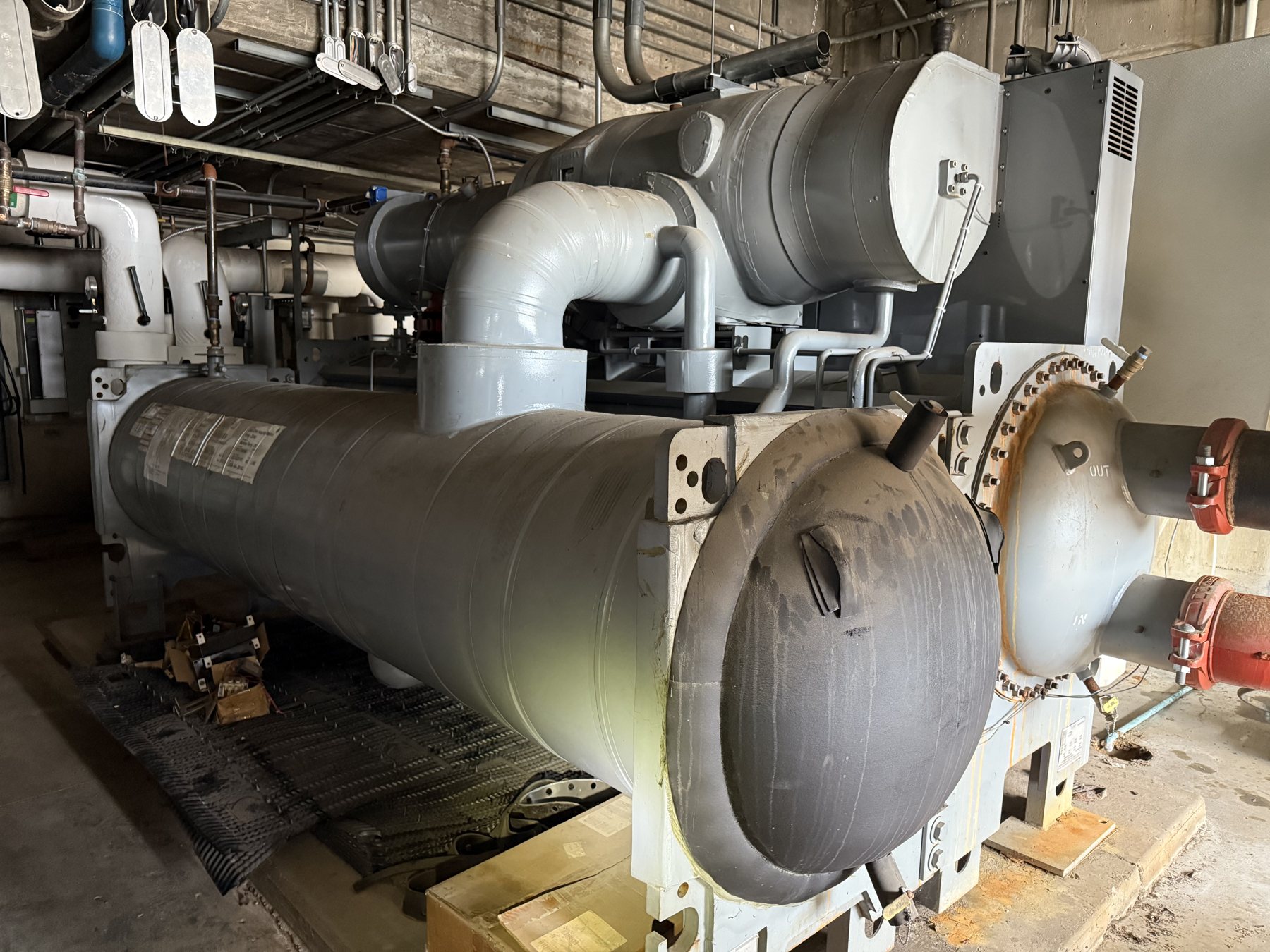
Carrier equipment includes different chiller configurations, so the Carrier name alone does not establish the compressor type, capacity or removal method. A full model and serial number, along with photographs of the entire assembly and control panel, gives a much better starting point. Some Carrier documentation uses model families beginning with numbers such as 19 or 30; copy the exact characters shown rather than guessing the series. Record whether the unit is an outdoor air-cooled package or a machine-room installation connected to water systems. For this equipment, note whether Carrier controls, compressors and any separate starter or electrical cabinet are included. If an item is not visible or its history is unknown, say so rather than assigning it a condition. Drawings or records are helpful when available, but the first conversation can begin with clear photographs and the information already on hand.
Nameplates and photographs for Carrier chillers
Start with a readable picture of the main nameplate. Include the manufacturer, complete model and serial number, rated cooling tons, supply voltage and refrigerant if those fields are present. Do not confuse nominal tons of cooling with the physical weight of the machine. If the plate is damaged, provide the clearest photo available and say which fields cannot be read. A separate compressor, motor, starter or module tag can add useful context, but it does not replace the primary unit identification. For Carrier chillers, copy the exact Carrier model and serial numbers and photograph capacity, voltage and refrigerant fields.
Access and site details for Moore
For equipment in Moore, note whether the chiller is beside a building, behind a service enclosure or above the ground floor. A gate opening, curb, rooftop parapet or narrow drive can change the handling plan. Show the complete path from the equipment to the area where a truck could be positioned, and identify any access restrictions. In particular, show the frame and the path around condenser coils or the mechanical-room shell, as applicable. Give approximate measurements where possible and identify a contact who knows the property. These observations support a site-specific plan; they do not replace a professional evaluation of the lifting route or the ground.
Refrigerant and isolation for Carrier chillers
Before a chiller is moved, the actual refrigerant and utility connections need a site-specific plan. The buyer handles refrigerant recovery and disconnects; the facility and removal personnel coordinate the isolation points and safe access. Share the refrigerant label, any known conversion, and whether water or electrical connections still appear intact. Do not open valves, dismantle piping or start the equipment just to obtain an offer. If the charge or isolation status is uncertain, reporting that uncertainty is useful. For this machine, use the refrigerant listed on the actual unit rather than assuming it from the Carrier name or model family.
Rigging, loading and freight for Carrier chillers
For an agreed purchase, the buyer handles rigging and crane requirements, loading and hauling, with all freight covered. Tell the team if the chiller is above grade, below grade or in a crowded machine room, and whether a gate or roof edge limits access. Manufacturer drawings, original shipping dimensions and lifting instructions can support the assessment if available. The physical route, possible staging area and safe lift points must be checked for the particular job; cooling tonnage is not a lifting specification. If manufacturer rigging instructions or an equipment drawing are available, identify the exact model they apply to. A different unit from the same manufacturer may have different dimensions or lifting points.
Cash offers and condition review for Carrier chillers
Our business buys used industrial chillers; it does not sell chillers. You can request a cash offer with payment upfront, and the equipment does not need to be tested. A useful description identifies the machine, current condition, included components and the location from which it would be removed. Any offer is subject to review and agreement, including verification that the seller is authorized to transfer the chiller. Known damage or missing documentation should be disclosed instead of hidden or guessed. The exact model and serial number are more useful than the brand name by itself; list any separate controls or starter that are included.
Preparing for equipment handoff in Moore
For a smoother discussion, name a site contact and someone authorized to sell the equipment. Specify the chiller, associated controls and any loose components that transfer with it, and identify anything excluded. Provide the actual loading entrance, known utility status and any facility rules that affect access. Current photos and existing records help the removal team develop an appropriate plan. Leave isolation, refrigerant recovery and the handling work to the coordinated professionals instead of making unverified preparations. To start, call (614) 715-3047, text photos, or email saleselectricalbuyers@gmail.com. Include the site city or county and a good contact number, but do not enter restricted areas merely to take pictures.