03 / BUYER'S GUIDE
A practical way to sell 1,500 to 2,000 ton chillers in Midwest City, Oklahoma
If you have 1,500 to 2,000 ton chillers in Midwest City, Oklahoma, start with the equipment's actual condition and location. We buy used industrial chillers, including machines from 20 to 2,000+ tons, and consider all tonnages and refrigerants. Equipment can come from data centers, decommissioned power plants, refineries, manufacturing shutdowns, hospitals and campuses. The buyer handles crane work, rigging, refrigerant recovery, disconnects, loading and hauling, with all freight covered. No testing is required. Cash offers and payment upfront are available after the equipment and transaction are reviewed.
Heavy equipment documentation and site readiness
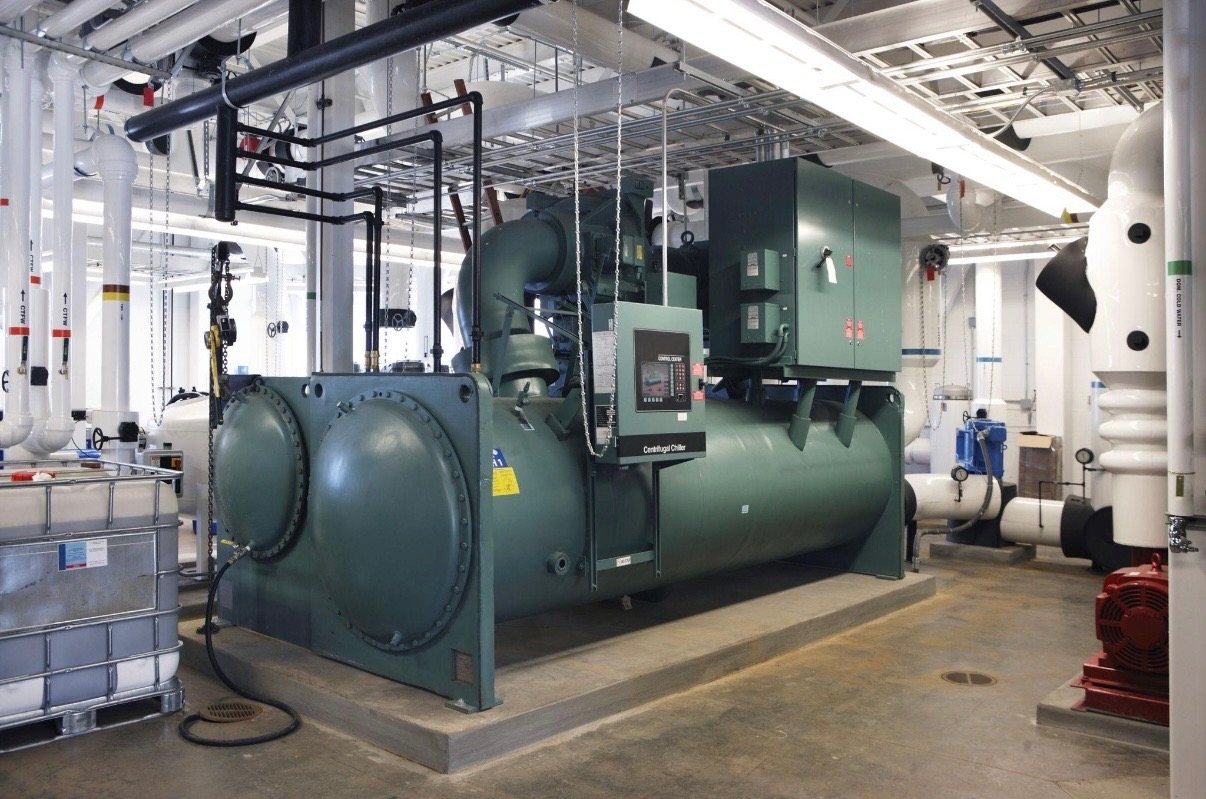
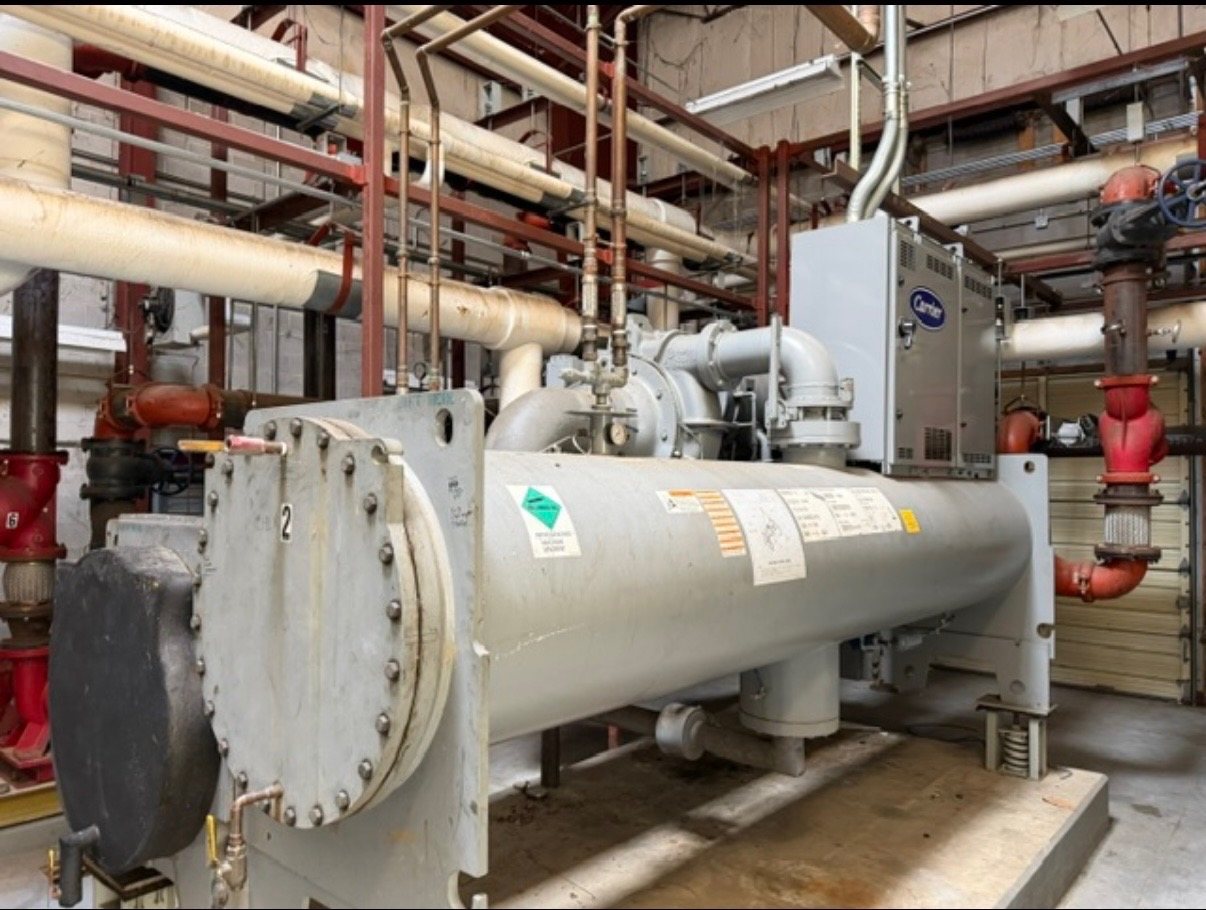
A large chiller's nameplate rating does not determine its shipping mass, center of gravity or handling method. Provide the actual model, serial number, documented dimensions and any manufacturer rigging information. Show the machine from multiple sides and identify separate drives, starters and major piping. Note whether access passes through a mechanical room, service tunnel or exterior opening so the removal team can evaluate the necessary plan. For this equipment, show all main assemblies and distinguish the chiller rating from dimensions, shipping weight and included accessories. If an item is not visible or its history is unknown, say so rather than assigning it a condition. Drawings or records are helpful when available, but the first conversation can begin with clear photographs and the information already on hand.
Nameplates and photographs for 1,500 to 2,000 ton chillers
A complete model and serial number helps distinguish similar-looking chillers. Record the nameplate capacity, refrigerant and power requirements when readable, and photograph any separate compressor or control labels that may clarify the configuration. Include one wide image and several detail images rather than relying on a single close-up. If a field is missing or the original nameplate is gone, note the uncertainty and share whatever matching drawings or maintenance records the facility already has. For 1,500 to 2,000 ton chillers, photograph the manufacturer plate showing the exact capacity, model, serial number, voltage and refrigerant.
Access and site details for Midwest City
A Midwest City facility may have specific entry, escort or photography rules; ask the site contact before documenting restricted areas. Identify the actual machine room or yard, the permitted loading entrance and nearby equipment that must remain accessible. Measurements of doors and a description of overhead or underground constraints help the removal team assess the route. In particular, measure the actual equipment and restrictive openings, and identify a documented shipping weight if one is available. Give approximate measurements where possible and identify a contact who knows the property. These observations support a site-specific plan; they do not replace a professional evaluation of the lifting route or the ground.
Refrigerant and isolation for 1,500 to 2,000 ton chillers
A machine can appear inactive while refrigerant, electrical energy or pressurized water remains present. Leave the system intact and report what is known about its status. The buyer handles refrigerant recovery and disconnects, coordinated with the property's authorized personnel and appropriate qualified workers. Identify shared utilities or operating equipment that may constrain isolation. Do not assume a line is empty, release refrigerant, remove guards or perform a test to create a more complete listing. For this machine, identify the refrigerant and connected utilities without assuming the tonnage determines the charge or isolation method.
Rigging, loading and freight for 1,500 to 2,000 ton chillers
The buyer handles crane work, rigging, loading and hauling, and covers all freight. The safe method still depends on the actual site and the machine's verified dimensions and lifting information. Photograph the nearest suitable vehicle approach and the entire path between it and the chiller. Share the narrowest door or gate width, overhead clearance, changes in elevation and any known floor or ground restrictions. If a crane appears necessary, point out overhead lines and structures without assuming where a crane can safely stand. Rated refrigeration tons measure cooling capacity, not the weight to be lifted. Use documented shipping data for the exact machine when it is available, and tell the team if major components have been added or removed.
Cash offers and condition review for 1,500 to 2,000 ton chillers
We are a buyer only: we purchase used industrial chillers and do not sell them. Cash offers and payment upfront are part of the buying process, and no equipment testing is required. Send honest information about visible damage, missing pieces, disconnection and the available records. An offer depends on review of the equipment, ownership and practical removal details; it is not an automatic promise to purchase every submission. The owner should identify the person authorized to transfer the equipment and any limits on what is included. Use the nameplate rating when possible and explain if the offered equipment includes multiple separate machines rather than one chiller.
Preparing for equipment handoff in Midwest City
Separate the equipment description from the facility's access requirements. Identify the legal owner or authorized representative, list what is included, and describe where the chiller sits today. Note whether the facility requires escorts, permits, protection for occupied areas or coordination with an operating plant. Existing drawings and safe, current photos can help, but missing information should be marked unknown. Pickup and payment details are agreed for the actual transaction rather than inferred from an online description. To start, call (614) 715-3047, text photos, or email saleselectricalbuyers@gmail.com. Include the site city or county and a good contact number, but do not enter restricted areas merely to take pictures.