03 / BUYER'S GUIDE
A practical way to sell Trane chillers in Enid, Oklahoma
If you have Trane chillers in Enid, Oklahoma, start with the equipment's actual condition and location. We buy used industrial chillers, including machines from 20 to 2,000+ tons, and consider all tonnages and refrigerants. Equipment can come from data centers, decommissioned power plants, refineries, manufacturing shutdowns, hospitals and campuses. The buyer handles crane work, rigging, refrigerant recovery, disconnects, loading and hauling, with all freight covered. No testing is required. Cash offers and payment upfront are available after the equipment and transaction are reviewed.
Trane chiller labels, controls and components
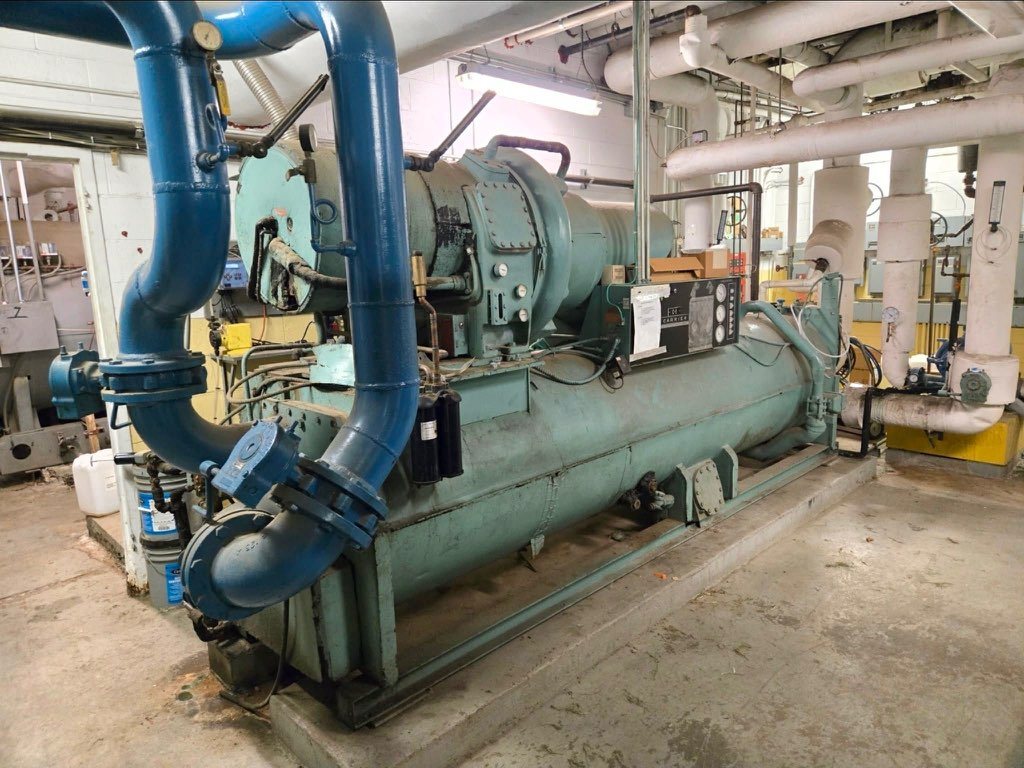
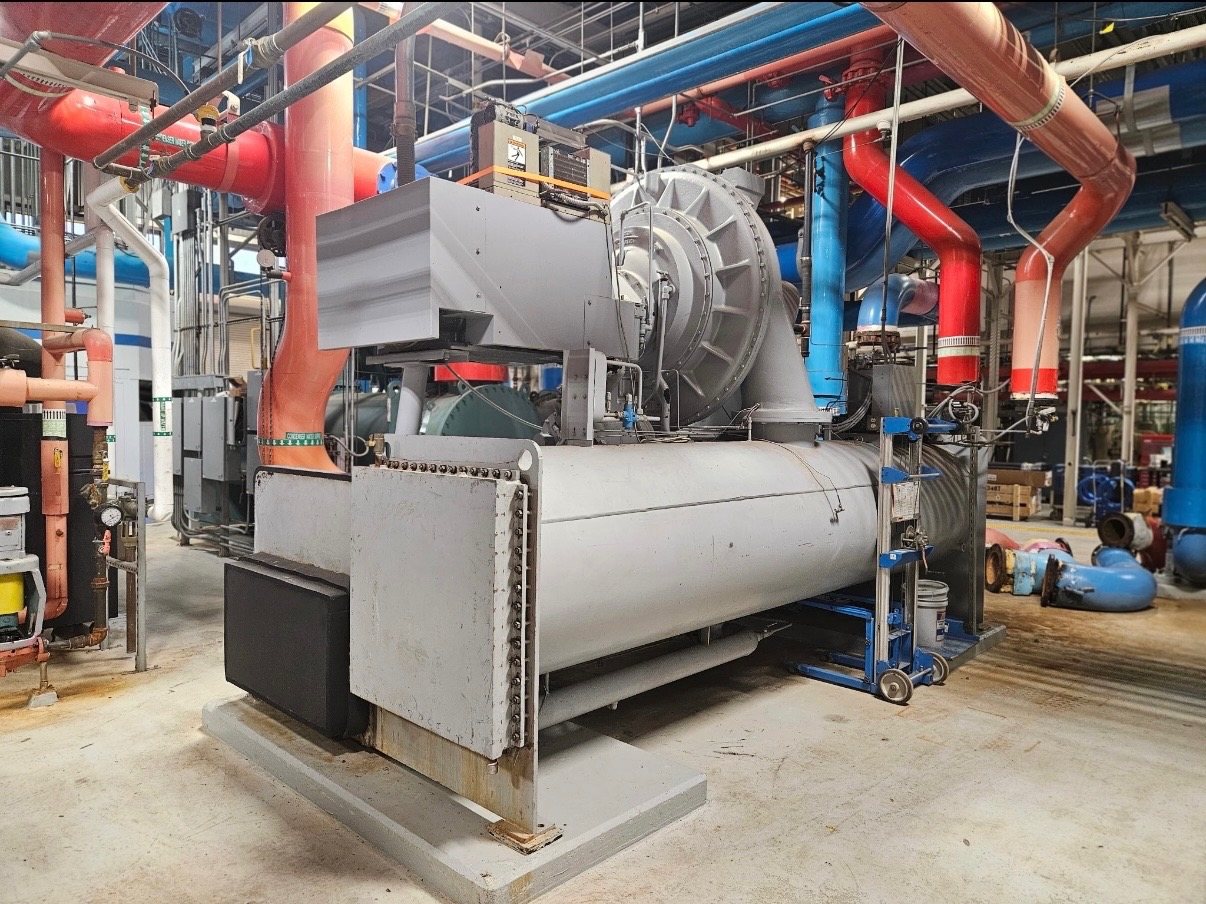
Trane chillers occur in several compressor and cooling configurations. The exact model and serial number are more informative than a generic Trane label: photograph the nameplate and the complete machine, then include the controller and any separate starter. A model designation can help identify an equipment family, but the plate and available records should be used to confirm actual capacity, electrical supply and refrigerant. Indicate whether the chiller is packaged outdoors or is part of an indoor chilled-water plant. For this equipment, show the Trane control panel and disclose missing covers, disconnected components or visible damage. If an item is not visible or its history is unknown, say so rather than assigning it a condition. Drawings or records are helpful when available, but the first conversation can begin with clear photographs and the information already on hand.
Nameplates and photographs for Trane chillers
Start with a readable picture of the main nameplate. Include the manufacturer, complete model and serial number, rated cooling tons, supply voltage and refrigerant if those fields are present. Do not confuse nominal tons of cooling with the physical weight of the machine. If the plate is damaged, provide the clearest photo available and say which fields cannot be read. A separate compressor, motor, starter or module tag can add useful context, but it does not replace the primary unit identification. For Trane chillers, photograph the complete Trane unit and compressor or starter tags where safely accessible.
Access and site details for Enid
For a chiller in the Enid area, describe both the local approach and the final movement from the equipment to the loading area. A property may have ample outdoor space but still contain a narrow gate, pipe rack or soft ground near the chiller. Share site photos and note any facility operating restrictions or seasonal ground conditions relevant to staging. In particular, identify any control cabinet, connected pipework, doorway restrictions and proposed exit path. Give approximate measurements where possible and identify a contact who knows the property. These observations support a site-specific plan; they do not replace a professional evaluation of the lifting route or the ground.
Refrigerant and isolation for Trane chillers
Before a chiller is moved, the actual refrigerant and utility connections need a site-specific plan. The buyer handles refrigerant recovery and disconnects; the facility and removal personnel coordinate the isolation points and safe access. Share the refrigerant label, any known conversion, and whether water or electrical connections still appear intact. Do not open valves, dismantle piping or start the equipment just to obtain an offer. If the charge or isolation status is uncertain, reporting that uncertainty is useful. For this machine, report the refrigerant stated on the unit and whether there are multiple circuits or a known prior recovery.
Rigging, loading and freight for Trane chillers
For an agreed purchase, the buyer handles rigging and crane requirements, loading and hauling, with all freight covered. Tell the team if the chiller is above grade, below grade or in a crowded machine room, and whether a gate or roof edge limits access. Manufacturer drawings, original shipping dimensions and lifting instructions can support the assessment if available. The physical route, possible staging area and safe lift points must be checked for the particular job; cooling tonnage is not a lifting specification. If manufacturer rigging instructions or an equipment drawing are available, identify the exact model they apply to. A different unit from the same manufacturer may have different dimensions or lifting points.
Cash offers and condition review for Trane chillers
We only buy used industrial chillers; we do not sell equipment. A seller can request a cash offer, with payment upfront and no testing required. Provide available information about condition, ownership and removal access so the equipment can be evaluated on its own facts. If pumps, controls, starters or other items are included, list them separately. A purchase is subject to review and mutual agreement; a photo or capacity label by itself is not a promise that a particular unit will be accepted. The exact model and serial number are more useful than the brand name by itself; list any separate controls or starter that are included.
Preparing for equipment handoff in Enid
Before coordinating a pickup, identify the property contact, the authorized equipment owner and any documentation the facility needs for a transfer. Make a list of chiller components to be included and separately identify items that remain with the building. Share site entry rules, available drawings and the known status of electrical, water and refrigerant connections. Photographs should reflect the present condition. The parties can then agree on the details of access, removal and payment without relying on an assumed installation or an unverified schedule. To start, call (614) 715-3047, text photos, or email saleselectricalbuyers@gmail.com. Include the site city or county and a good contact number, but do not enter restricted areas merely to take pictures.